
Conservation charities have some of the most powerful stories in the world. So why does so a lot of conservation marketing feel like it was written by a committee who’ve never experienced the thrill of spotting a hare hunkered down in a field?
I’ve pondered about this a lot, and I think it has something to do with what happens when organisations try to sound ‘professional’ – and end up sounding like nobody in particular. So, what does authentic marketing for conservation charities look like?
Authentic marketing isn’t the opposite of professional. It’s not messy, or unpolished, or un-strategic. It’s marketing that sounds like the organisation it represents. And for a conservation charity – one with passionate people, meaningful work and a genuine connection to the natural world – that’s a major asset. One that too many organisations are leaving untapped.
What authentic marketing is not
There’s a lot of confusion about this.
Authentic marketing is not just posting a tonne of photos of wildlife on Instagram. It’s not writing captions that sound like David Attenborough narrating a BBC documentary. It’s not being earnest and hoping people notice.
It’s also not the opposite of strategy. Some organisations treat ‘authentic’ as an excuse to avoid being intentional, just posting what feels right, whenever, without thinking about who they’re trying to reach, or what they want those people to do.
Authenticity without strategy is noise. Strategy without authenticity is marketing that nobody believes.
What authentic marketing actually is
Authentic marketing for conservation charities starts with one question: what do we actually sound like when we’re at our best?
Not in a board report. Not in a funding application. In a conversation with someone who’s genuinely curious about what you do, and why you do it.
That conversation – the real one, the unfiltered one, is where the gold is. That’s where all the things that make your organisation worth caring about, come pouring out. The specific patch of land you’re trying to protect, and why it matters. The species that’s returning because of the work you’re doing. The volunteer who came for a weekend and hasn’t missed one in three years.
Those are the stories that connect. Not because they’re dramatic or polished, but because they’re real.
Why conservation charities specifically struggle with this
There are a few reasons I see this pattern again and again.
The first is audience fear. Conservation charities often try to reach everyone; funders, volunteers, the general public, schools, local communities, government bodies – all at once, with the same message. The result is messaging that’s so generic or broad it lands with nobody.
The second is the expertise trap. The people closest to the work know the most about it, which means they often revert to language that’s familiar to them but less meaningful to others; habitat management, biodiversity net gain, species recovery programmes. Ask yourself; what does this mean to my audience? Will it compel them to care, or take action? Will it make them feel connected to us?
The third is resource anxiety. Marketing often feels like a luxury to organisations focused on the work itself. So it gets done quickly, by whoever has a spare hour, without the space to think carefully about voice, strategy or audience.
What it looks like in practice
Authentic marketing for conservation charities usually involves three things done well.
A clear sense of who you’re actually talking to in any given piece of content. Not ‘everyone who cares about nature’ – someone specific. A potential donor. A local landowner. A young person who’s never been to your site. Different audiences need different things, and trying to reach all of them at once usually means reaching none of them well.
Language that’s genuine. Read your website homepage out loud. Does it sound like a person talking? Or does it sound like it was written to impress someone on a grant panel? It’s OK to show personality.
Stories that make the work visible. The impact of conservation is difficult to show in a few seconds; a healthier river, a recovering population of a species, soil that’s starting to come back to life. Finding ways to make that visible, maybe through video, or numbers that mean something, through the stories of people who’ve witnessed it, is one of the most important things conservation marketing can do.
Conservation brands that are standing out
Here’s a few examples of conservation organisations that I think are doing a great job of standing out from the crowd by using real personality in their messaging. Be inspired!
RSPB
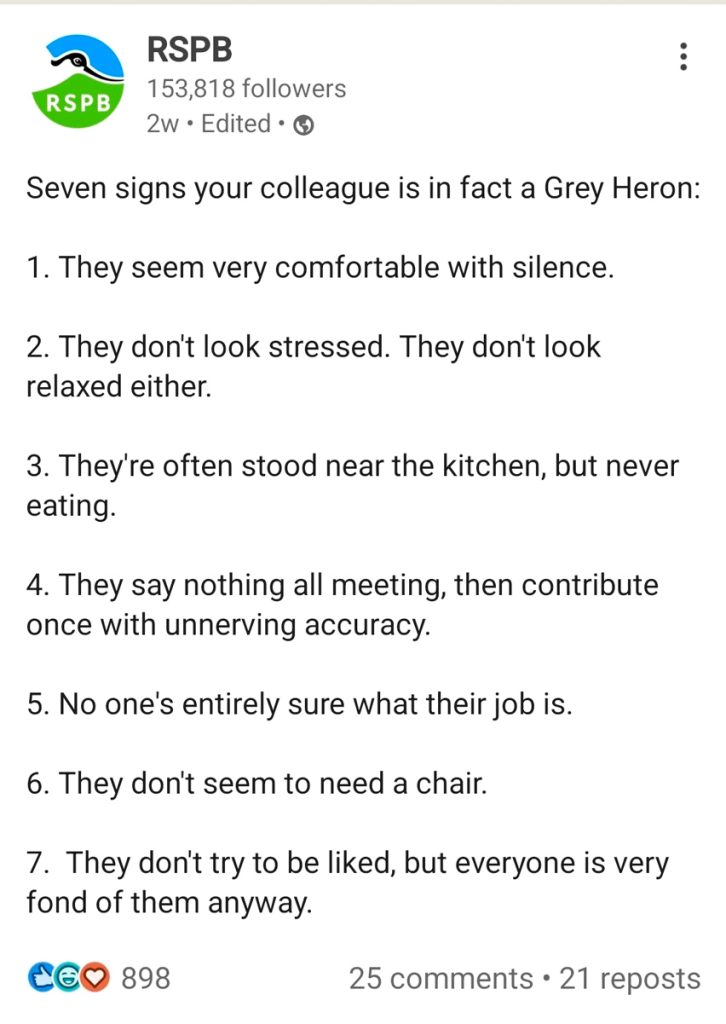
Proving that even on professional social media sites, like LinkedIn, posts don’t have to be bland, boring or formal. Posts like ‘7 signs your colleague is in fact a grey heron’ likening human traits to that of one of the key British bird species connects the audience directly with their key messaging, it resonates, it entertains, and it’s memorable. Well done RSPB!
National Park Service (NPS)
Using social media to engage audiences with humour and tongue-in-cheek messaging connects them to a wider audience, with broader appeal.
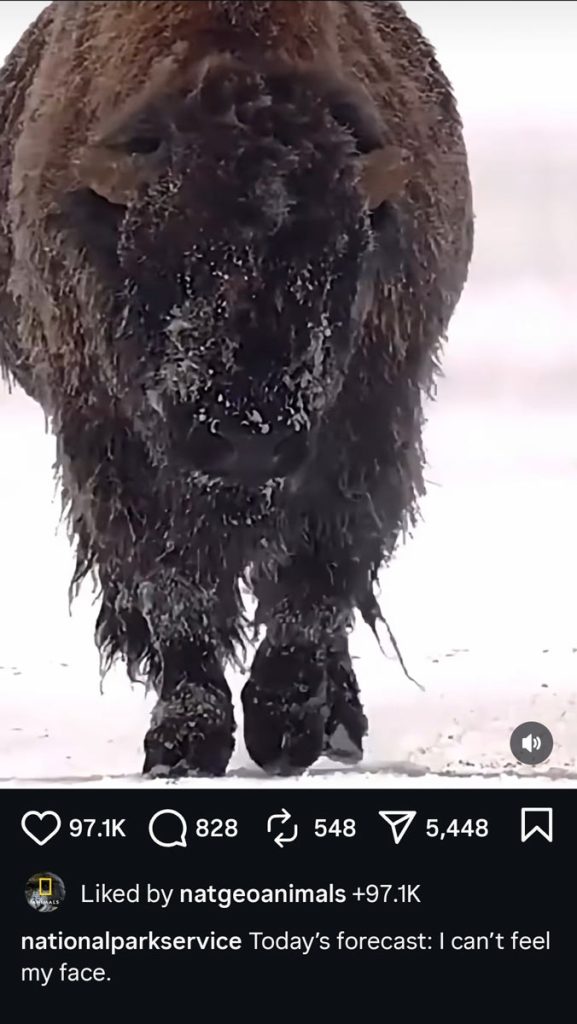
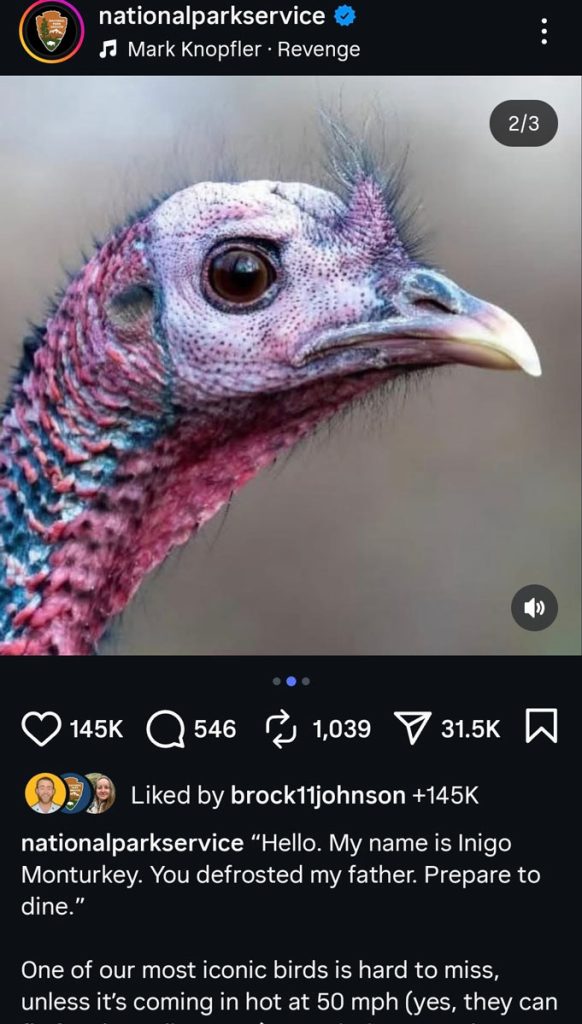
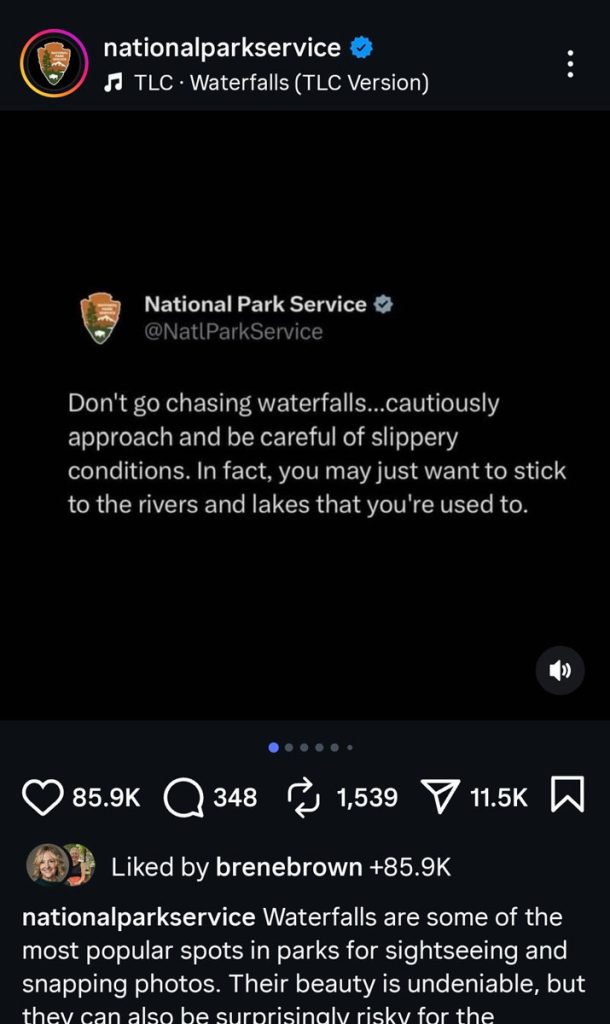
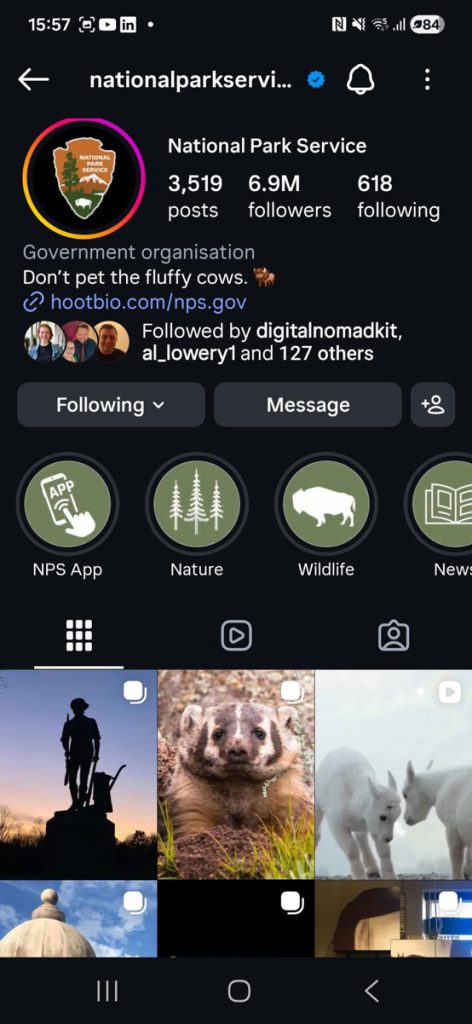
National Park Service (NPS) create meme-worthy content that compels their audience to share with friends and in turn, amplifies their messaging. Funny pics, videos, sound effects, well chosen songs and captions that also convey real and relevant messages e.g. ‘Don’t pet the fluffy cows’ – with a buffalo emoji, and ‘Don’t go chasing waterfalls…cautiously approach and be careful of slippery conditions. In fact, you may just want to stick to the rivers and lakes that you’re used to’, with the TLC hit song ‘Waterfalls’ playing in the background. Such creative tactics have them achieving huge engagement on every post.
Chester Zoo
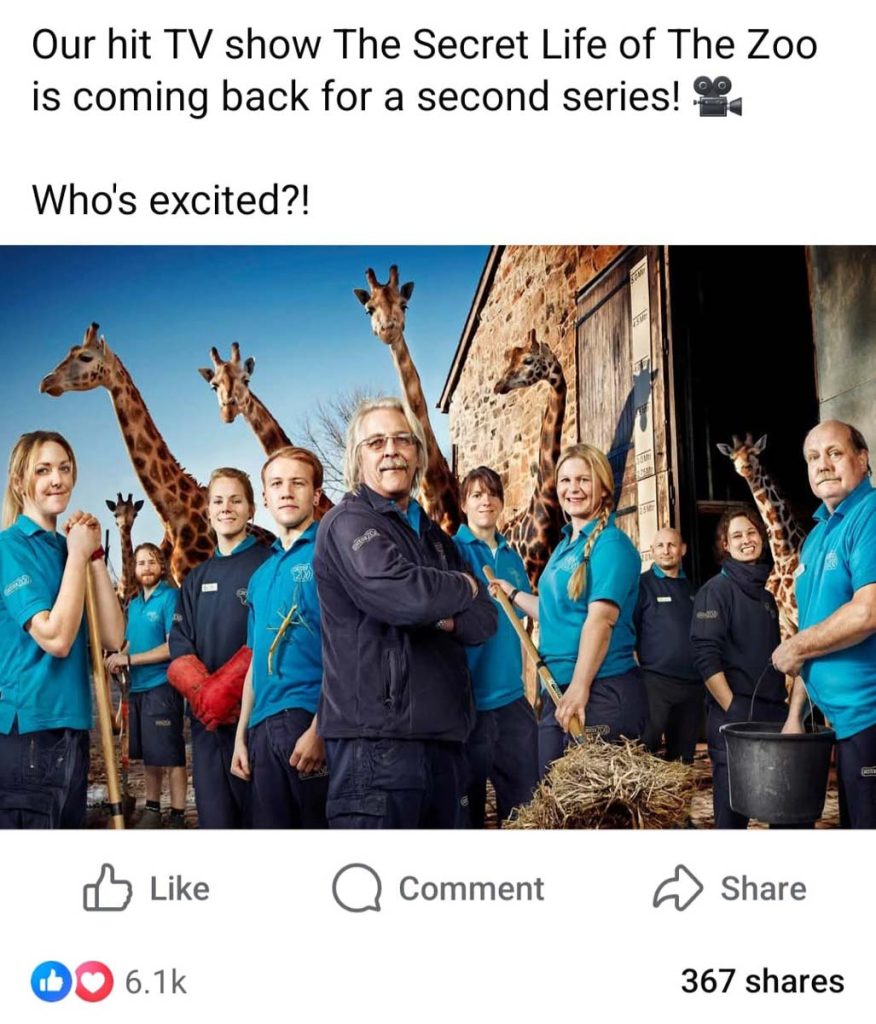
Got their work in front of the masses with their TV show ‘The Secret Life of the Zoo’ for ten series! Sharing behind the scenes, real emotions and stories from the keepers, staff and visitors, and demonstrating the highs and lows of the realities of caring for 35,000 animals. This got Chester Zoo‘s work inside people’s actual living rooms. Check out the Chester Zoo Facebook page here for inspiration!
A question worth asking
If a supporter read everything on your website and all your social media from the last six months – what would they understand about you? Not just what you do, but who you are? What you believe? Why it matters? Will they care?
If the answer is ‘not much’ or ‘not sure’, that’s where authentic marketing starts.
Wild Heart Marketing works specifically with conservation organisations, wildlife charities and environmental causes to help them find and communicate their authentic voice. If this resonates, I’d love to have a conversation.
Frequently Asked Questions
Q: What is authentic marketing for charities?
A: Authentic marketing for charities means communicating in a way that genuinely reflects the organisation’s values, voice and work, rather than defaulting to generic charity-sector language or trying to sound ‘professional’ in a way that distances people.
It’s about being genuine, specific and conversational in how you talk about what you do, and why it matters.
Q: How can conservation charities improve their marketing?
A: Start by getting clear on who you’re actually talking to in each piece of content.
Then focus on language that sounds like your organisation at its best – not a funding report, but a real conversation. Show personality! Use specific stories and real examples rather than broad statements about impact.
Be consistent. Showing up regularly with something genuine is more effective than occasional perfectly-polished campaigns.
Q: Do small conservation charities need a marketing strategy?
A: Yes, and often more than large ones, because the consequences of spending limited resources on the wrong activities are more significant.
A simple, focused strategy doesn’t need to be complicated or expensive to produce. It just needs to be clear about who you’re trying to reach, what you want them to understand, and how you’re going to get in front of them consistently.
Q: What makes conservation marketing effective?
A: Effective conservation marketing tends to be specific rather than general, human and story focused, and consistent rather than random and ad-hoc.
It makes the work visible in ways that non-specialists can understand and care about.